Japan Ski Holidays from the UK:Niseko and Hakuba
Japan ski holidays deliver some of the best powder snow on Earth, blending world-class skiing with a culturalexperience unlike any other destination. Holiday World Ski Classics offers ATOL-protected Japan ski packages from the UK to two of the country’s finest resorts - Niseko on Hokkaido and Hakuba in the Japanese Alps - with flights, accommodation and transfers arranged by our specialist team. Niseko, on Japan’s northern island of Hokkaido, averages over 15 metres of snowfall each season and iswidely regarded as one of the world’s top powder skiing destinations. The Niseko United ski area links four resorts - Grand Hirafu, Hanazono, Niseko Village and Annupuri - across more than 2,000 acres of skiable terrain, with night skiing, backcountry gate access, traditional onsen hot springs and a vibrant dining scene. Hakuba, set beneath the 3,000-metre peaks of the Northern Japanese Alps in Nagano Prefecture, hosted ski events at the 1998 Winter Olympics and features 10 interconnected ski areas with over 130 runs. Hakuba’s terrain ranges from wide beginner-friendly groomers to steep Olympic-grade courses and famous off-piste tree skiing at Cortina. The resort is accessible in around three hours from Tokyo by bullet train and bus. Both resorts offer ski-in, ski-out accommodation options and convenient airport transfers, making a Japan ski holiday from the UK straightforward to plan and book.
Both Niseko and Hakuba offer convenient accommodation, some with ski-in, ski-out access, and easy transfers from major airports, making Japan ski holidays fairly stress-free and highly enjoyable. Whether you’re chasing deep powder, cultural experiences, or unforgettable landscapes, Niseko and Hakuba deliver the ultimate Japanese winter adventure.
Five Reasons to Choose Japan for Your Next Ski Holiday
1. Legendary powder snow -Japan’s ski resorts receive some of the deepest, driest snow in the world, fuelled by cold Siberian weather systems crossing the Sea of Japan. Niseko alone averages over 15 metres per season, and the ultra-light “Japow” is consistently ranked among the best powder on the planet.
2. World-class resort infrastructure - Niseko and Hakuba feature modern high-speed lifts, English-speakingski schools, and well-groomed pistes alongside extensive off-piste terrain. Hakuba’s 10 resorts cater to every level, while Niseko’s four interconnected areas are accessible on a single lift pass.
3. Unique cultural experiences - After a day on the slopes, soak in a traditional Japanese onsen (hotspring), enjoy world-class sushi, ramen and izakaya dining, or explore historic towns and vibrant cities nearby.
4. Terrain for every ability - From Tsugaike Kogen’s ultra-wide beginner slopes in Hakuba to Niseko’s famous backcountry gates and Hakuba Cortina’s advanced tree runs, Japan’s ski terrain suits complete novices, progressing intermediates and expert powder hunters alike.
5. Accessible from the UK - Fly direct from London Heathrow to Tokyo (approximately 11.5 hours), then connect onward to Sapporo New Chitose Airport for Niseko or take the bullet train to Nagano for Hakuba.
Holiday World arranges flights, transfers and accommodation in a single ATOL-protected package.
Japan Ski Holidays – Frequently Asked Questions
Q: What are the best powder ski resorts in Japan?
A: Japan is famous for its ultra-light powder snow, widely known as “Japow.” The best powder resorts include Niseko and Rusutsu on Hokkaido, and Hakuba Valley and Nozawa Onsen in the Japanese Alps. Niseko is particularly renowned, averaging over 15 metres of snowfall per season thanks to moisture-laden Siberian weather systems. Holiday World offers packages to Niseko and Hakuba, Japan’s two mostaccessible powder destinations for UK skiers.
Q: How much does a ski holiday to Japan cost from the UK?
A: Japan ski holidays vary in price depending on travel dates, accommodation grade and package inclusions. Flights from the UK to Tokyo typically start from around £1000-£1200 return, while lift passes in Niseko cost approximately £490 for an 8 day pass and Hakuba costs approximately £406. Mid-range hotels in both Niseko and Hakuba offer strong value compared to equivalent European alpine resorts. Contact Holiday World for a tailored quote based on yourgroup size and preferred dates.
Q: What is skiing in Japan actually like?
A: Skiing in Japan is defined by exceptionally light, dry powder snow, peaceful tree-lined runs, and a distinctly Japanese après-ski culture centred on onsen bathing and outstanding local cuisine. Slopes tend to be quieter than comparable European or North American resorts. Many resorts, including Niseko, offer night skiing under floodlights until 9pm. The combination of reliable snow, manageable crowds and cultural immersion makes Japan a unique skiing destination.
Q: When is the best time to ski in Japan?
A: The Japan ski season runs from mid-December to late March. January and February deliver the deepest and most consistent powder, particularly in Niseko and Hakuba. For quieter slopes and milder temperatures, March is an excellent choice - especially for families and intermediate skiers. Holiday World recommends booking early for peak January–February dates, as top accommodation in Niseko sells out quickly.
Q: Should I book my Japan ski holiday early?
A: Yes. Popular Niseko and Hakuba properties for January and February fill up 8–10 months in advance,and early booking often secures better flight prices and room selection. Holiday World releases Japan ski packages from mid-March each year for the following winter season. Booking early also ensures ATOL-protected arrangements with confirmed flights and transfers.
Q: Do I need a visa to ski in Japan?
A: British passport holders do not currently need a visa for short-stay tourism in Japan (up to 90 days) under the visa waiver arrangement. Ensure your passport is valid for the duration of your stay. Check the latest entry requirements on GOV.UK before travelling.
CHECK OUT OUR 2 JAPAN SKI RESORTS
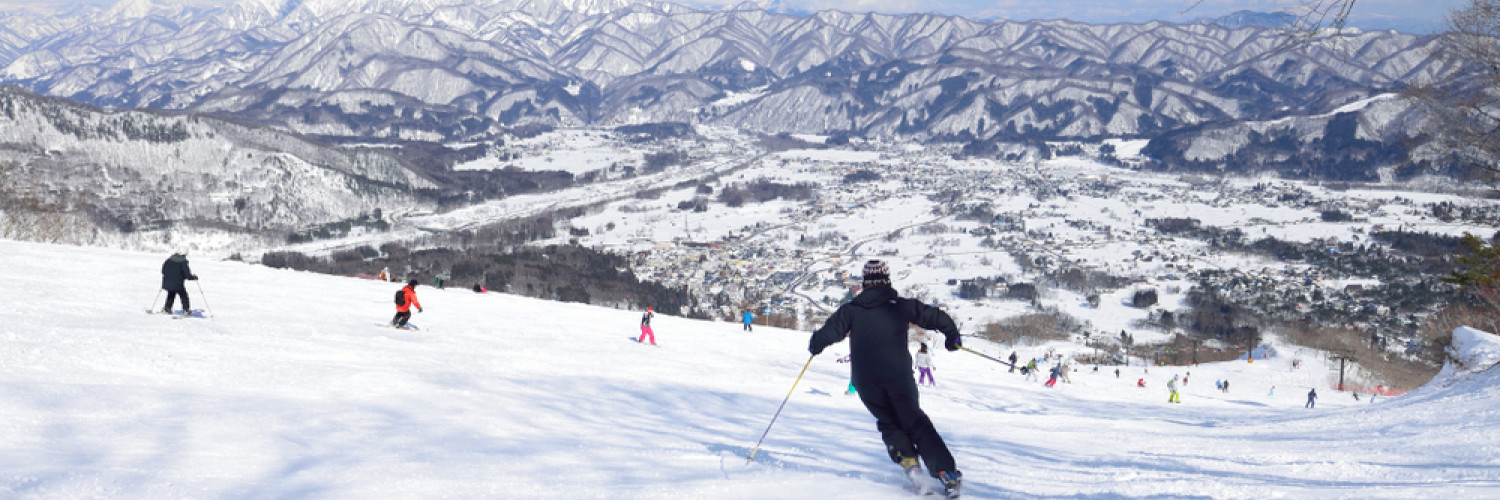
Hakuba Valley, host of the 1998 Winter Olympics, sits at the foot of the 3,000-metre Northern Japanese Alps in Nagano Prefecture. Ten ski resorts share a single lift pass, offering over 130 runs from gentle beginner groomers to the steep Olympic courses of Happo One and the famous tree skiing at Cortina. Hakuba is approximately three hours from Tokyo by bullet train and bus.
Holiday World offers 12 Hakuba properties ranging from budget onsen hotels to luxury ski-in, ski-out residences.
Niseko, on Hokkaido’s western coast, is Japan’s most famous powder skiing destination, averaging over 15 metres of snow per season. The Niseko United ski area links Grand Hirafu, Hanazono, Niseko Village and Annupuri across more than 2,000 acres of terrain, with Japan’s largest night-skiing operation and a well-regulated backcountry gate system. Holiday World offers 19 Niseko properties, from mid-range hotels in Hirafu to luxury ski-in, ski-out residences in Niseko Village.
| |
Japan |
| As Japan's premier ski region, Hakuba ski resort offers more terrain, vertical rise and advanced ski slopes than anywhere in Japan. Having hosted the 1998 Winter Olympic Games and numerous FIS World Cup events, skiing in Hakuba Japan has a well-established international reputation as a world-class ski destination. From one end of the valley to the other and with 10 resorts accessing over 130 ski runs as well as providing access to incredible off-piste terrain of the Japan Alps, Hakuba ski resort's reputation as a serious skiers and snowboarders’ destination is well balanced across all levels. This combination of world-class skiing, abundant snowfalls, sunny skies and 10 ski resorts truly makes Hakuba ski resort a precious gem among the rugged Japan Alps. From the complete novice to the expert skier, Hakuba ski resort provides some of the best skiing in Japan. Everything from gentle beginner slopes, to steeps, bumps and long groomers, and of course, plenty of fresh powder. Happo One Resort is Hakuba Valley's premier ski resort, boasting some of the highest snowfalls and longest vertical pitches in all of Japan, while Hakuba 47 and Goryu's terrain challenges everyone from first timers to experts. Tsugaike and Iwatake resorts are also well suited to the beginner and intermediate levels, with long cruising trails and plenty of powder runs for those who wish to explore. Hakuba Japan skiing has built a reputation as a serious skiers destination is well balanced across all levels, offering something for everyone.
Hakuba47 Winter Sports Park
Hakuba Cortina Snow Resort
ABLE Hakuba Goryu Snow Resort
Hakuba Happo-one Snow Resort
Hakuba Iwatake Snow Field
Hakuba Norikura Onsen Snow Resort
Jiigatake Snow Resort
Kashimayari Snow Resort
Tsugaike Mountain Resort
White Resort Hakuba Sanosaka
Is Hakuba good for Beginners?
Best Resorts: Tsugaike Kogen, Hakuba Goryu, Norikura, Iwatake
Terrain: Wide, gentle slopes with plenty of space to learn and progress. Tsugaike Kogen is especially known as one of the most beginner-friendly resorts in Japan, offering ultra-wide, low-gradient slopes like the Kane-no-naru-oka Slope (average 8° incline) that are ideal for new skiers and families.
Features: Excellent ski schools, well-groomed runs, and safe areas for first-timers.
Comments: “By far the best for complete beginners” is often said about Tsugaike, with Goryu’s Iimori and Norikura’s learning zones also highly rated.
Is Hakuba good for Intermeidates?
Best Resorts: Hakuba 47, Goryu, Iwatake, Cortina
Terrain: A large number of red (intermediate) runs offering progression from green slopes. Iwatake and Hakuba 47 have many long, wide intermediate pistes, with Goryu featuring particularly good grooming and variety.
Features: Some resorts, like Cortina and Norikura (using a dual pass), have terrain that allows intermediates to try tree skiing and gentle off-piste with manageable challenges.
Comments: Japanese “red” intermediate runs can be steeper and more challenging than their Western counterparts, offering a good step-up for those looking to progress.
Is Hakuba good for Advanced skiers?
Best Resorts: Happo One, Hakuba 47, Cortina, Tsugaike (DBD area)
Terrain: Steep pistes, moguls, challenging off-piste, world-famous tree runs, and abundant powder. Resorts like Happo One have iconic runs with gradients over 30–35° (Reisen Slalom, Olympic Course 2), while Cortina draws advanced skiers for its legendary tree-skiing and deep snow.
Features: Dedicated “Double Black Diamond” freeride zones (e.g., Tsugaike DBD), expert tree areas (47 Tree Zone and Cortina), and demanding mogul fields. Access to backcountry routes for experienced riders
Comments: Hakuba is known globally for its advanced terrain and is a magnet for powder hounds and expert-level skiers. Advanced areas are not always suitable for snowboarding due to moguls and steepness, but freeriders will find challenging conditions and huge snowfall
Hakuba and the Epic Pass
Hakuba Valley is an Epic Pass partner. Epic Pass holders receive five consecutive days of skiing across all 10 Hakuba resorts, plus five days at Rusutsu on Hokkaido. This makes it possible to combine a Hakuba ski holiday with a Hokkaido powder extension on a single pass. Holiday World can arrange dual-resort itineraries on request.
Q:Skiing at Niseko or Hakuba?
Snow quality: Niseko wins
Niseko is famous for ultra-light, consistent powder (“Japow”). It gets frequent storms and very reliable soft snow, especially in January–February. Skiers go there primarily for deep powder days and tree skiing.
Hakuba Valley still gets excellent snow, but it’s typically a bit heavier and less consistent than Niseko. You may get massive storm cycles, but also clearer weather and more variation between conditions.
Terrain: Hakuba wins
Hakuba has steeper slopes, bigger vertical, and much more terrain variety across 10 resorts. Advanced skiers generally prefer it for long runs, steeps, and varied skiing. It also hosted parts of the 1998 Winter Olympics.
Niseko is more mellow overall: wide groomers, playful tree skiing, sidecountry gates, and terrain that suits intermediates really well. Experts sometimes find it less challenging unless they venture into backcountry terrain.
Resort layout
Niseko is four interconnected ski areas on one mountain that you can ski between easily.
Hakuba is a valley of 10 separate resorts connected mostly by shuttle bus rather than ski lifts, so it feels more sprawling and exploratory.
Atmosphere & nightlife
Niseko feels more international—lots of Australians, English-speaking ski culture, upscale restaurants, bars, and après around Hirafu. It can feel almost like an international ski town in Japan.
Hakuba feels more Japanese and lower-key, with izakayas, onsens, and a more local mountain-town atmosphere. Nightlife exists (especially Echoland), but it’s generally quieter.
Access & cost
Hakuba is easier if you’re already visiting Tokyo—you can take the Shinkansen to Nagano and transfer to the valley in roughly 3 hours. Niseko requires flying to Hokkaido.
Quick decision guide
Choose Niseko if: you care most about powder, tree skiing, easy side country access, and lively après.
Choose Hakuba if: you want steeper terrain, more resort variety, easier Tokyo access, and a more Japanese feel. | |
| Niseko ski resort is The Bucket List Powder destination....Japan's No.1 Resort
Niseko Japan ski resort, on Japan’s northern island of Hokkaido, is legendary for its legendary “Japow”—light, dry powder averaging over 15 metres of snow each season—making it a paradise for powder hounds. The interconnected Niseko United ski area spans Grand Hirafu Niseko, Hanazono, Niseko Village, and Annupuri, accessible on one Niseko United pass and offering lift-served bowls, tree runs, and ungroomed backcountry - often reachable via resort gates with guided access. Deep powder days, night skiing in Niseko ski resort under lights, and the thrill of waist-deep snowfall create magic for experienced skiers. Beyond the slopes, Niseko’s scene includes onsens, global cuisine, and vibrant apres-ski, making it the world’s most complete powder ski destination
Niseko is renowned for its deep powder snow, excellent terrain variety, and approachable slopes, making it an ideal destination for all skill levels. Here’s how the skiing stacks up for beginners, intermediates, and advanced skiers:
Is Niseko good for Beginners?
Top spots: Annupuri and Hanazono are particularly praised for beginner terrain. Grand Hirafu and Niseko Village also offer quality gentle slopes.
Terrain: Niseko features wide, gentle, well-groomed green runs like the Family Run (Hirafu) and Juicy Fruit (Hanazono), ideal for learning and building confidence. Annupuri’s lower slopes are also very beginner-friendly.
Facilities: Extensive ski schools, English-speaking instructors, and progressive terrain help make learning smooth. Many beginner slopes are spacious and not overly crowded, especially in Annupuri.
Experience: Beginners find Niseko a great place to start, with the gentle gradient and soft powder making falls less intimidating.
Is Niseko good for Intermediates?
Top spots: Niseko United’s four interconnected resorts (Annupuri, Niseko Village, Grand Hirafu, and Hanazono) offer a great range of red runs.
Terrain: There is a wealth of intermediate (red) trails—long, wide groomers and undulating pistes—spread across all four resorts. Notable runs include ‘Utopia’ and ‘Panorama’ in Annupuri and a wide array of intermediate routes by the upper lifts throughout the mountain.
Features: Groomed slopes are well kept, and there’s scope for intermediates to try easy tree runs and progress towards off-piste if desired. The terrain layout means you’re rarely stuck on one side—intermediates can ski from sector to sector.
Experience: Intermediates will find themselves spoiled for choice, with variety in pitch and length—perfect for refining technique and enjoying scenery.
Is Niseko good for Advanced skiers?
Top spots: Grand Hirafu, Hanazono (Strawberry Fields), Annupuri (challenge runs), Niseko Village, and the entire off-piste area.
Terrain: While the marked black (expert) runs are generally not extremely steep by European or North American standards, they can get mogulled and pitchy. The real attraction is the world-class off-piste and “sidecountry”—tree runs like Strawberry Fields and Miharashi offer bottomless powder, and the backcountry access via the gate system is extensive and famous.
Features: Advanced skiers enjoy steep tree lines, off-piste powder, and frequent snowfall (often more than 15m per year). Niseko’s “Japow” is globally revered, with powder-filled glades, challenging mogul fields, and lift-served access to gates for backcountry enthusiasts.
Experience: If you’re comfortable in the trees and deep snow, Niseko can be paradise—especially after a fresh storm. Expert guiding is available for those seeking steeper challenges, and the gate system opens up even more terrain conditions permitting.
Niseko FAQ
Q: When is the best time to ski in Niseko?
A: The Niseko ski season runs from beginning of December to late March. January and February offer the deepest powder and coldest temperatures, Chineses New Year is always very busy in Niseko. March brings milder weather, cheaper hotel prices and quieter slopes — ideal for those looking to ski Japan on a budget.
Q:Is Niseko an Epic Pass or Ikon Pass partner?
A: Niseko is an Ikon Pass partner, offering 7 days’ skiing with an Ikon Pass or 5 days with an
Ikon Base Pass (some blackout dates apply). Holiday World can also arrange the local Niseko United resort
pass, which may offer better value for shorter stays.
Q:Do I need avalanche gear for backcountry skiing in Niseko?
A:Yes—if you’re heading through Niseko’s backcountry gates, avalanche safety gear is strongly recommended, and many experienced riders treat it as essential. A standard setup includes an avalanche beacon (transceiver), probe, and shovel, plus the knowledge to use them. Niseko’s official guidance also recommends a helmet and stresses that terrain beyond the gates is outside resort patrol control. We recommend that you hire a local back country guide which we can arrange for you.
Q:Skiing at Niseko or Hakuba?
Snow quality: Niseko wins
Niseko is famous for ultra-light, consistent powder (“Japow”). It gets frequent storms and very reliable soft snow, especially in January–February. Skiers go there primarily for deep powder days and tree skiing.
Hakuba Valley still gets excellent snow, but it’s typically a bit heavier and less consistent than Niseko. You may get massive storm cycles, but also clearer weather and more variation between conditions.
Terrain: Hakuba wins
Hakuba has steeper slopes, bigger vertical, and much more terrain variety across 10 resorts. Advanced skiers generally prefer it for long runs, steeps, and varied skiing. It also hosted parts of the 1998 Winter Olympics.
Niseko is more mellow overall: wide groomers, playful tree skiing, sidecountry gates, and terrain that suits intermediates really well. Experts sometimes find it less challenging unless they venture into backcountry terrain.
Resort layout
Niseko is four interconnected ski areas on one mountain that you can ski between easily.
Hakuba is a valley of 10 separate resorts connected mostly by shuttle bus rather than ski lifts, so it feels more sprawling and exploratory.
Atmosphere & nightlife
Niseko feels more international—lots of Australians, English-speaking ski culture, upscale restaurants, bars, and après around Hirafu. It can feel almost like an international ski town in Japan.
Hakuba feels more Japanese and lower-key, with izakayas, onsens, and a more local mountain-town atmosphere. Nightlife exists (especially Echoland), but it’s generally quieter.
Access & cost
Hakuba is easier if you’re already visiting Tokyo—you can take the Shinkansen to Nagano and transfer to the valley in roughly 3 hours. Niseko requires flying to Hokkaido.
Quick decision guide
Choose Niseko if: you care most about powder, tree skiing, easy sidecountry access, and lively après.
Choose Hakuba if: you want steeper terrain, more resort variety, easier Tokyo access, and a more Japanese feel. | |